



Style
Boutique Color Combinations That Make Flowers Look Instantly Beautiful
Sep
A beautiful bouquet is not always about choosing the most expensive flowers or filling it with as many blooms as possible. Often, the real magic lies in the colours. The right combination can make a simple arrangement feel romantic, cheerful, elegant, dramatic, or effortlessly luxurious. Whether you are choosing flowers for a birthday, wedding, anniversary, or simply to brighten someone’s day, understanding how colours work together can help you create a bouquet that instantly catches the eye.
Soft and Romantic Colour Combinations
Soft colour palettes remain a favourite because they create a natural sense of harmony without feeling overwhelming. They work especially well for romantic occasions, thoughtful gifts, and elegant celebrations.
One timeless combination is blush pink, white, and cream. Pink roses paired with white lilies, cream carnations, or soft-toned hydrangeas can create a bouquet that feels delicate and polished. Adding a little greenery gives the arrangement definition while allowing the lighter flowers to remain the centre of attention.
Another beautiful option is lavender, pale pink, and soft blue. These colours have a calm, almost dreamy appearance and work wonderfully in spring and summer arrangements. Purple lisianthus, pink roses, and blue accents can create a gentle contrast without making the bouquet appear too busy.
For something warm and romantic, consider peach, coral, and ivory. This palette feels fresh and inviting, with enough warmth to stand out while maintaining a refined appearance. It can work beautifully for anniversaries, engagement celebrations, or simply as a thoughtful surprise for someone special.
The key to using softer shades is balance. Choose one colour to take the lead, then use the others as supporting tones. This prevents the bouquet from looking flat while still maintaining a cohesive appearance.
Bold Contrasts That Make a Bouquet Stand Out
If the goal is to make an immediate impression, contrasting colours can create a much stronger visual effect. Opposite or distinctly different shades naturally draw attention to one another, giving the bouquet more energy and personality.
A classic choice is red and white. Deep red roses surrounded by white flowers create a bold contrast that feels romantic, elegant, and instantly recognizable. This combination is particularly popular for anniversaries, Valentine’s Day, and other meaningful occasions.
For a brighter and more cheerful arrangement, yellow and purple can be an excellent pairing. Yellow flowers bring warmth and optimism, while purple adds richness and depth. Sunflowers, yellow roses, irises, and purple statice can work together to create a bouquet that feels lively without becoming chaotic.
Another striking option is orange and deep pink. These colours sit close enough to feel naturally connected but are different enough to create movement and visual interest. This combination is ideal for birthdays, congratulations, and celebrations where a bright, energetic look is desired.
When working with bold colours, it is usually best to avoid adding too many competing shades. Two dominant colours, supported by greenery or neutral flowers, often create a more attractive result than a bouquet containing every colour imaginable.
Elegant Colour Palettes for Every Season
Seasonal colour combinations can make bouquets feel even more appropriate and thoughtfully designed. They also offer an easy starting point when you are unsure which flowers to choose.
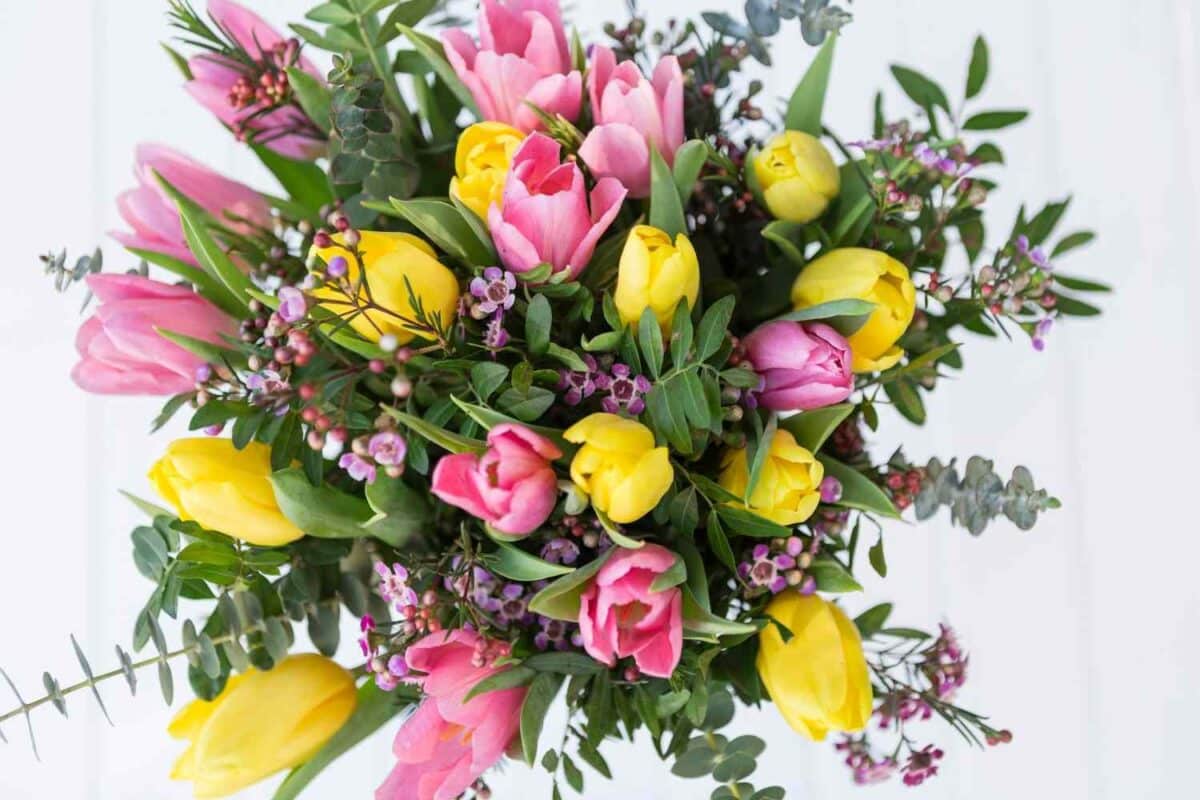
During spring, combinations such as pink, yellow, and white reflect the freshness of the season. Tulips, daffodils, roses, and other seasonal blooms can be arranged to create a bright and uplifting display. The result feels cheerful without being overly formal.
Summer bouquets often look beautiful in coral, orange, pink, and green. These warm shades capture the energy of the season and work well for casual celebrations, outdoor gatherings, and birthday gifts. A touch of white can also help brighten the arrangement and provide visual breathing room.
For autumn, richer combinations such as burgundy, orange, and gold create a warm and sophisticated appearance. Deep red flowers paired with orange blooms and golden accents can give the bouquet a fuller, more dramatic character.
Winter arrangements can take a more refined approach with white, deep red, and dark green. The combination feels festive while remaining elegant. Alternatively, white flowers with silver-toned accents and greenery can create a clean, sophisticated look for holiday gatherings and formal occasions.
No matter the season, neutral tones such as white, cream, and soft green can help connect stronger colours. They act as visual bridges and prevent the arrangement from appearing too heavy.
Choosing Colours Based on the Occasion
The occasion can also guide your colour selection. Romantic moments often suit red, pink, blush, or peach arrangements, while birthdays may call for brighter shades such as yellow, orange, and vibrant pink. Sympathy flowers are commonly designed with softer, more peaceful colours, including white, blue, lavender, and pale pink.
For professional gifts or corporate occasions, restrained combinations often work best. White and green, soft pink and cream, or purple and white can appear thoughtful and polished without being overly personal.
It is also worth considering the recipient’s personality. Someone who enjoys bold fashion or colourful interiors may appreciate a bouquet filled with strong contrasts. A person who prefers a minimal and understated style may be more drawn to white flowers with soft pastel accents.
Ultimately, the most beautiful bouquet is one that feels intentional. A thoughtful colour palette can transform even familiar flowers into an arrangement that feels distinctive and memorable.
For expertly arranged bouquets and thoughtfully chosen colour combinations, Calgary Florists can help you find perfect cut flowers for any occasion and the person receiving them. Whether you prefer soft and romantic tones or something bold and eye-catching, choose a bouquet that makes the right impression.
FAQs
- What is the best colour combination for a romantic bouquet?
Pink, red, blush, white, and cream are popular choices because they create a soft, warm, and romantic appearance. - How many colours should a flower bouquet have?
Two to four main colours usually create a balanced look, especially when greenery or neutral flowers are used as supporting elements. - Which flower colours work well for birthdays?
Bright shades such as yellow, orange, pink, and purple can create cheerful bouquets that suit birthday celebrations. - Can contrasting flower colours look elegant?
Yes. Combinations such as red and white or yellow and purple can look striking and elegant when balanced with complementary flowers and greenery. - Should bouquet colours match the season?
They do not have to, but seasonal colour palettes can make an arrangement feel more natural, timely, and suitable for the occasion.
